

Myopia, or nearsightedness, affects many children in the U.S., and that number keeps climbing. If your child’s prescription seems to get a little stronger every year, you’re watching this trend play out firsthand.
Ortho-K lenses can slow the progression of myopia while giving your child clear daytime vision, without glasses or contacts to manage. These lenses work overnight, gently reshaping the cornea while your child sleeps.
What Ortho-K Lenses Actually Do
Ortho-K stands for orthokeratology, and it’s simpler than it sounds. Your child wears rigid, specially designed contact lenses only at night. While your child sleeps, the lenses gently reshape the cornea, the clear front surface of the eye. That reshaping temporarily changes how light bends as it enters the eye.
Take the lenses out in the morning, and your child can see clearly all day. The cornea holds its new shape for about 24 hours, so there’s no need for glasses or daytime contacts at school, sports, or play.
Clear daytime vision is just part of the story, though. For growing kids, Ortho-K can also help slow how fast their myopia progresses, which means their prescription may not climb as quickly year over year.
How Ortho-K Slows Myopia Progression
The cornea is surprisingly flexible, especially in children, and Ortho-K lenses put that flexibility to work.
Overnight, the lenses apply gentle, controlled pressure to specific areas of the cornea, similar to how a retainer holds teeth in place. That steady contact is what produces the vision correction we just covered.
But there’s a second effect, and it’s the one that matters most for myopia control. In untreated myopic eyes, peripheral light tends to focus behind the retina, a pattern that can encourage the eye to keep growing.
Ortho-K redirects that peripheral focus so it lands in front of the retina instead. That difference sends the eye a new growth signal and may help slow down how fast it elongates. Since eye elongation is what drives myopia to worsen, slowing that growth can help keep your child’s prescription more stable over time.
Bright light exposure and time outdoors also support this process, so regular time outside is a good complement to Ortho-K, not a replacement for it.
Why Active Kids Love Ortho-K
Beyond correcting vision, Ortho-K fits naturally into an active kid’s routine. Here’s what changes day to day:
- Sports get easier: No broken glasses on the field, no lost contacts in the pool, just clear vision during soccer, basketball, swimming, or recess.
- Confidence gets a boost: Plenty of kids feel better about school photos and social situations without glasses on their face all day.
- Weather stops being a hassle: No fogged-up lenses walking from the AC into summer heat, no rain spots blurring vision, no glasses sliding down mid-game.
- Screen time gets a little easier: Since your child isn’t managing glasses on top of a screen, there’s one less contributor to digital eye strain during homework or gaming.
And fewer glasses around the house means fewer frantic searches for them before school.
Caring for Ortho-K Lenses
Nightly lens care is simple, but it needs to become a habit. Each morning, have your child clean and disinfect the lenses with the solution your optometrist recommends.
Store the lenses in fresh solution every day, and swap out that solution regularly. Careful contact lens care matters here just like it does with regular contacts, since it’s your best defense against eye infections. Most kids adjust to the routine fast, especially once they feel the payoff: a full day of clear vision without daytime lenses or glasses.
Your Timeline for Results
Most kids notice clearer vision within the first few days of wearing Ortho-K lenses. Full correction typically develops within 1 to 2 weeks, though some kids get there sooner.
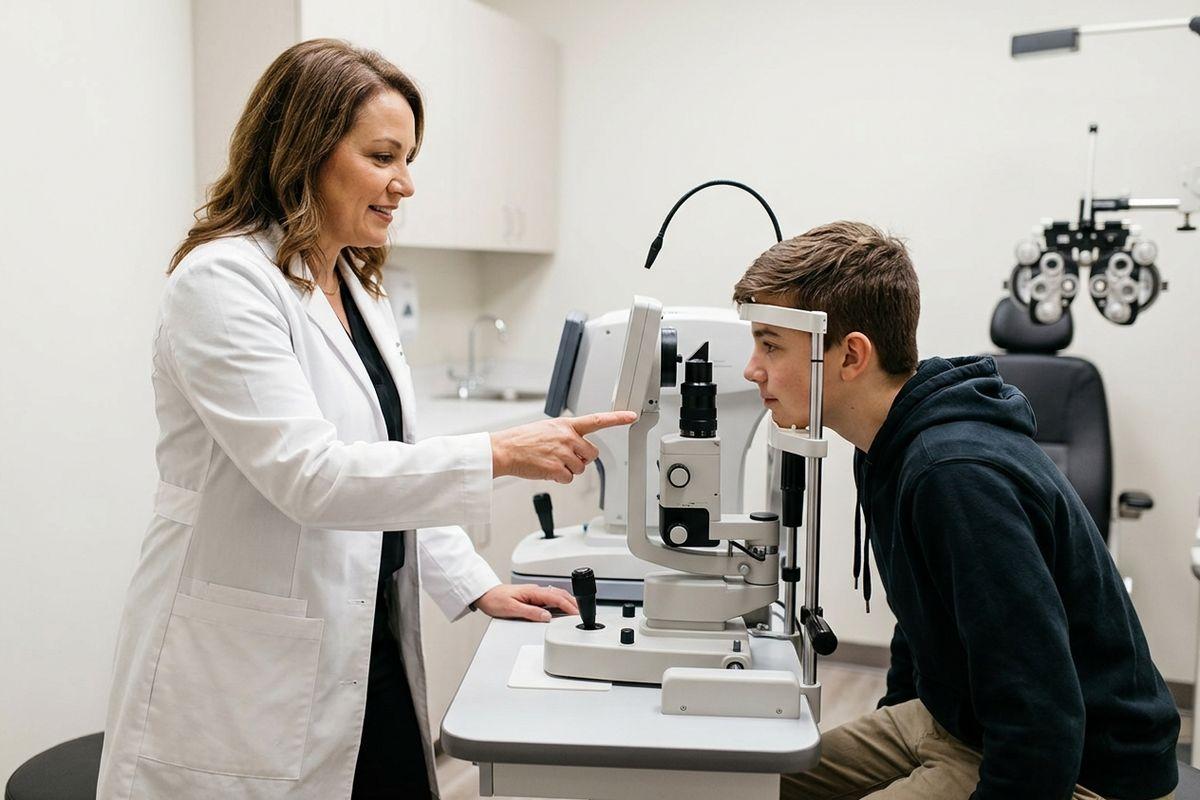
Book regular follow-up visits with your optometrist to track your child’s progress and eye health. These visits tend to happen more often in the first few months, then space out as your child’s eyes settle into the treatment.
Is Your Child a Good Fit for Ortho-K?
A few factors help determine whether Ortho-K makes sense for your child. Your optometrist will look at:
- Age: Kids between 8 and 16 tend to respond well, though maturity and the ability to handle lens care matter more than age alone.
- Prescription strength: Ortho-K generally works best for mild to moderate myopia, and your optometrist can confirm whether your child’s prescription qualifies.
- Eye health: Healthy corneas, adequate tear production, and no underlying eye conditions all support good lens wear.
- Commitment: Your child needs to wear the lenses every night and follow the care routine consistently, and your support with that routine and with follow-up visits makes a real difference.
Every child’s myopia risk factors look a little different, and your optometrist can walk you through what management options fit your child specifically.
Give Your Child’s Eyes a Head Start
Ortho-K lenses offer a way to support your child’s vision now, without surgery and without a drawer full of glasses. Talk with your optometrist about whether it fits your family’s routine and your child’s prescription.
Schedule a consultation with Bluebird Vision + Wellness, and find out if Ortho-K is the right next step for your child’s eyes.