
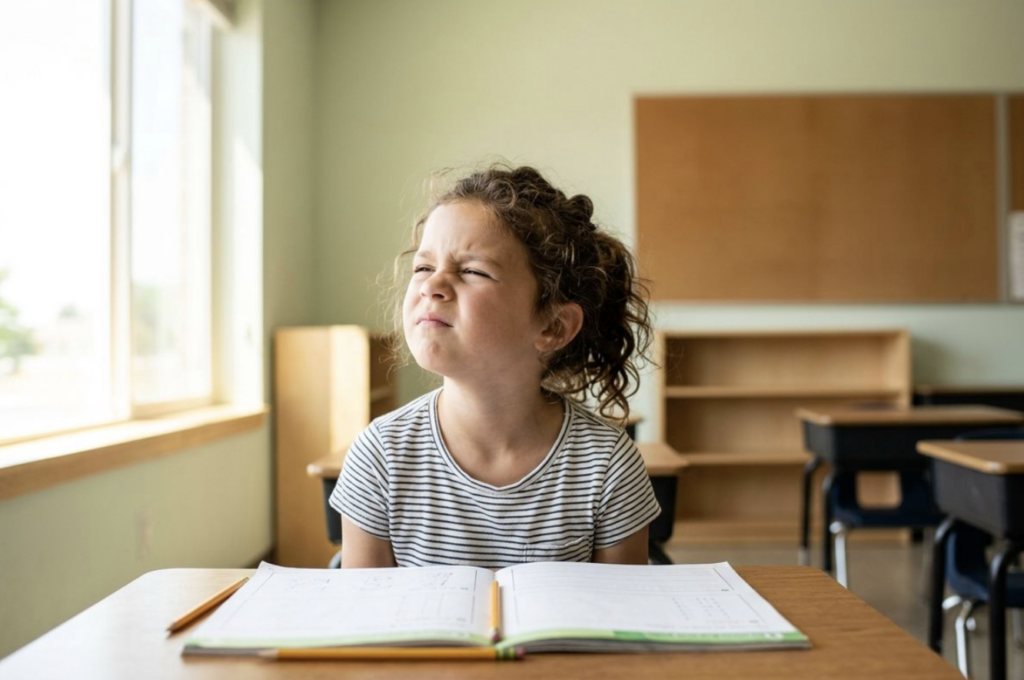
Kids rarely announce that their vision has changed. They assume everyone sees the world the way they do, so a blurry whiteboard or a headache after reading can go unmentioned for months. That’s part of why a children’s eye exam runs differently from an adult appointment. The tests are shorter and friendlier, built around what a 4-year-old can actually sit through.
Expect about an hour of simple, play-based testing that measures how clearly your child sees and how well both eyes work together, along with a close look at overall eye health.
Before Your Child’s Eye Exam
Get Your Child Ready Before You Go
A little prep at home makes the appointment run smoother for everyone.
Book a morning slot if your child is under 6. Attention runs short after lunch, and a rested kid gives an optometrist far more to work with.
Write down what you’ve noticed at home. Squinting at the TV, sitting inches from a tablet, or covering one eye during homework all point the optometrist toward specific tests. Family history counts too, so ask grandparents whether anyone wore strong glasses as a kid.
Talk about the visit in simple language the day before. Something like “the eye optometrist is going to look at your eyes and play some picture games” lands better than a long explanation.
Simple Preparation Steps
Bring a few things along with you:
- Current glasses or contacts, even if the prescription seems outdated
- Your notes on vision concerns from home and school
- Results from any school vision screening
- Details about eye conditions that run in the family
- A snack for afterward, especially for younger kids
What the Vision Tests Actually Look Like
The exam starts with familiar eye chart reading, but the approach depends on your child’s age and reading ability. Older children who can read letters can use traditional charts, while younger ones get picture-based versions.
Visual acuity tests measure how clearly your child sees at different distances. The optometrist examines both far vision (like seeing the board at school) and near vision (like reading a book). These tests show if your child needs glasses for distance, reading, or both.
Color vision screening helps identify any color blindness early. This information becomes important for school activities and future career choices. The test usually involves identifying numbers or shapes within colorful dot patterns.
Child-Friendly Testing Approaches
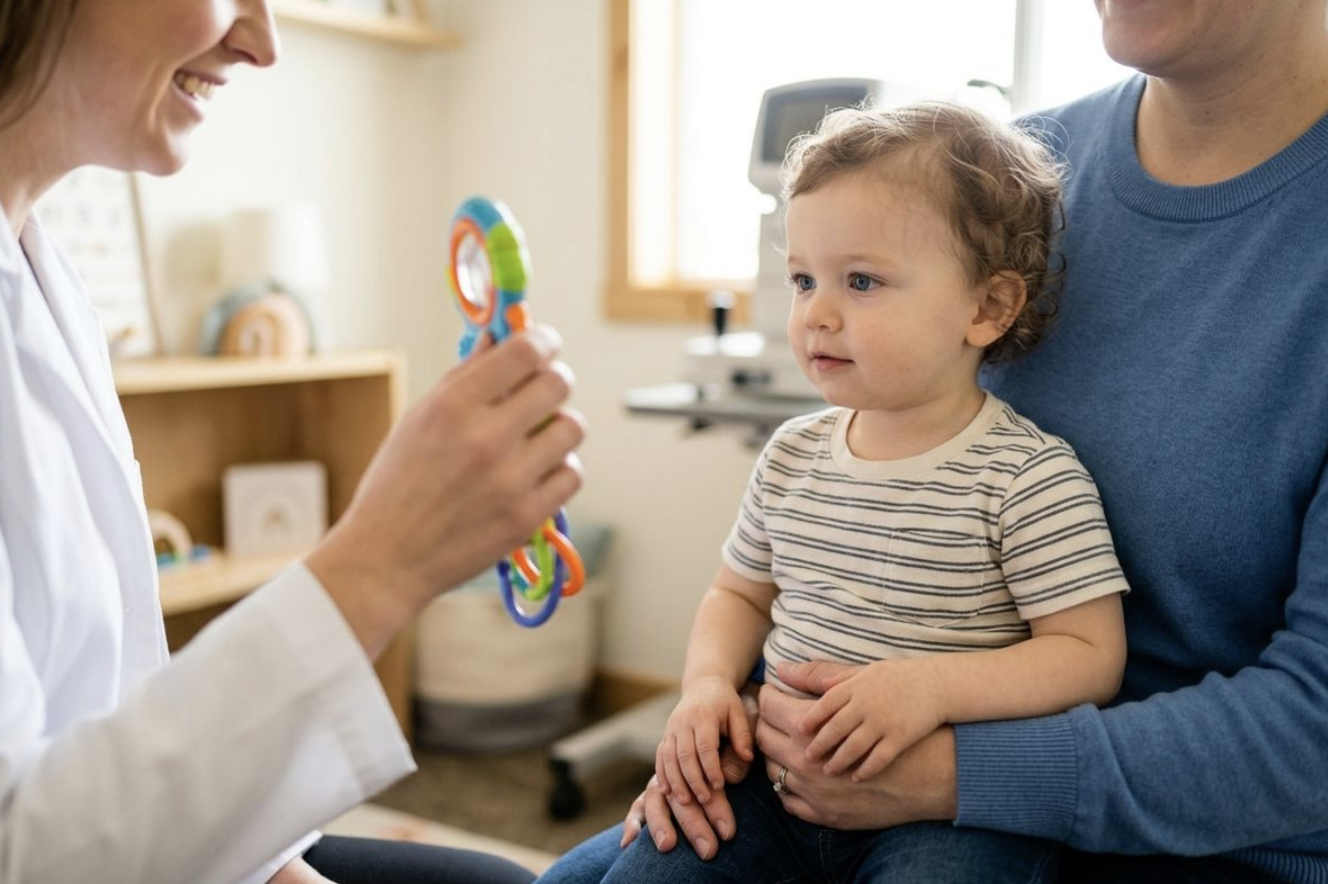
Many eye doctors use interactive methods to keep children engaged. Your child might play simple games that test their vision while they’re having fun. These activities work well for kids who have trouble sitting still.
All tests are designed for shorter attention spans. If your child gets restless, the doctor can take breaks or switch to different activities. The goal is getting accurate results while keeping your child comfortable. Amblyopia detection requires these specialized testing approaches to identify problems early.
Comprehensive Eye Health Examination
The rest of the appointment moves past clarity and into the physical structures of the eye.
Your optometrist starts on the outside, checking the eyelids and lashes and watching how the eyes follow a moving target. Weak teamwork between the two eyes makes reading exhausting, and it’s one of the reasons amblyopia goes unnoticed at home for so long.
Pupil response testing uses a small flashlight to check how your child’s pupils react to light. Normal pupils constrict in bright light and dilate in dim light. This quick test helps detect certain eye health issues.
Diagnostic Tools
A gentle slit lamp examination allows the doctor to see detailed structures inside your child’s eyes. This microscope-like instrument looks intimidating but doesn’t touch your child’s eyes. The bright light helps the doctor spot any problems that aren’t visible from the outside.
Retinal photography captures detailed images of the back of your child’s eyes. These pictures become part of their permanent record and help track any changes over time. The camera flash might surprise your child, but the process is comfortable.
Myopia Detection & Management Options
Nearsightedness tends to appear between ages 6 and 14, then strengthens through the teen years. Spotting it early gives you more room to act.
Your optometrist may measure axial length, which tracks how long the eyeball is growing from front to back. Eyes that grow too long end up nearsighted, and watching that number year over year shows which direction things are heading.
Mention it if you or your partner are nearsighted. Two nearsighted parents raise the odds noticeably, and that changes how closely your optometrist monitors things.
Treatments Available
Ask about myopia control if the prescription is climbing quickly. Options include specially designed soft lenses worn during the day, overnight lenses that gently reshape the cornea, and low-dose atropine drops. Each approach may slow how fast the prescription changes.
Send them outside, too. Research funded by the National Eye Institute found that children who spent more hours outdoors were less likely to become nearsighted, regardless of how much close work they did.
After the Exam and Next Steps
Your optometrist explains all results in terms you can understand. If your child needs glasses, you can learn about their prescription and what it means for daily activities.
Some kids wear glasses all day. Others only need them for homework and screens. You’ll get a clear answer on which situation applies and what to watch for while your child adjusts.
Your follow-up schedule depends on your child’s individual needs. Children with healthy eyes and no vision problems might return annually, while those with specific concerns need more frequent monitoring.
Put It on the Calendar Before School Starts
Vision changes quietly during the school years, and an annual exam is the steadiest way to keep up with it.
Bluebird Vision + Wellness works with kids of every age and keeps the visit low-stress from check-in to checkout. Book your child’s eye exam and find out how they’re really seeing the world.