
Focusing on Your Family
It’s never too early to focus on your children’s eye health and vision. Their sense of sight is important at every age and every stage of development.
It’s common for kids to be nervous for their first eye exam. Our optometrists are experienced with children and can put them at ease. Many kids even think their eye exams are fun! And, if your child does need glasses, we offer a wide selection of colors and styles that will make them smile—in durable materials that will make you smile, too.
Book their appointment today to help set them up for a lifetime of healthy vision.
Book AppointmentWhen Do Children Need Eye Exams?
The American Optometric Association recommends that children have exams at the following intervals:
- A comprehensive exam to establish a baseline between the ages of 6 and 12 months
- Another comprehensive exam as they grow and develop between the ages of 3 and 5
- Annual, comprehensive exams starting before 1st grade and continuing until adulthood
Proper vision can help children succeed in life and academics. Beyond just seeing what’s in front of them at school, visual skills are needed for social, cognitive, and motor skill development.
Book your child’s eye exam today!
Book Appointment

Valuable Visual Skills
Children aren’t born with the visual skills they need—they develop them over time, just like they develop the ability to walk and talk.
Good visual skills are essential to learning. Approximately 80% of what children learn happens through their vision. Whether it’s reading, interacting with other kids, throwing a ball around outside, or seeing what the teacher writes on the board, eyesight is involved.
If you want to set them up for success, it’s essential that visual skills are developing normally. Children who start school with undiagnosed vision problems may struggle to keep up in class. They may be misdiagnosed with ADHD or another behavioral disorder.
Undiagnosed vision problems can also lead to:
- Learning at a slower rate than their peers
- Behavioral and disciplinary problems
- Higher risk of dropping out of school
Stages of Sight
There are many milestones in a baby’s visual progression. Here’s what to expect at some critical stages:
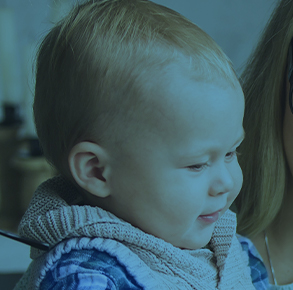
- Birth to 4 Months: Your baby’s vision is improving rapidly at this stage. They should be focusing on nearby objects and faces and begin to reach for things.
- 5 to 8 Months: A 3-dimensional view of the world begins to form, as does color vision.
- 9 to 12 Months: Babies begin to grasp objects and can judge distances.
- 1 to 2 Years: Hand-eye coordination and depth perception should be well-developed.
As babies grow and develop, you can help encourage their healthy visual development by playing games with them. Use the classic games like peek-a-boo and patty-cake, provide objects that can be explored with the hands and grasped, and play games that include dropping things and picking them up.
To help your child develop visual skills at the appropriate pace, bring them in for comprehensive eye exams.
How Do I Know if My Child Needs Glasses?
If children are experiencing a vision issue, they are often unable to articulate the problem—they might not even know there is a problem. Unlike adults, children have not established a baseline of what proper vision looks like for them.
Bringing your child for regular eye exams can help establish that baseline. We can detect vision problems early on. Book their appointment today!
Book AppointmentFrequently Asked Questions About Children’s Eye Exams
When should my child have their first eye exam?
The American Optometric Association recommends a first comprehensive exam between 6 and 12 months of age, a second between ages 3 and 5, and then annual exams starting before first grade and continuing through adolescence. Earlier is better than later — many childhood vision conditions respond best to treatment while the visual system is still developing.
My child passed a school vision screening. Do they still need an eye exam?
Yes. A school screening typically checks distance vision on a wall chart and nothing else. It can miss farsightedness, focusing problems, eye teaming issues, and early eye disease — conditions that affect reading and classroom performance far more than distance vision does. A comprehensive exam evaluates eye health, focusing, tracking, and how the eyes work together. Children pass screenings and still have significant vision problems.
How do you examine a child who can’t read or talk yet?
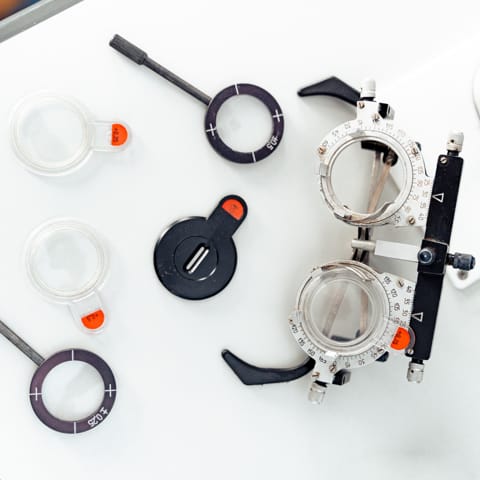
We don’t need your child to read letters or describe what they see. For infants and toddlers we use techniques like retinoscopy, which measures the prescription objectively by observing how light reflects off the retina, along with picture-based charts and tests that assess eye alignment and tracking. Most young children find the exam interesting rather than stressful, and we work at their pace.
What are the signs my child might need glasses?
Watch for squinting, sitting very close to screens or the television, holding books unusually close, frequent eye rubbing, complaints of headaches or tired eyes, covering one eye, losing their place while reading, or avoiding reading and close-up work altogether. A drop in schoolwork or reluctance to do homework can also be a vision issue rather than a motivation issue. Children rarely report vision problems themselves, because they assume everyone sees the way they do.
Does insurance cover my child’s eye exam?
Most vision plans cover an annual comprehensive exam for children. Medicaid covers vision services for enrolled children under 21 through the EPSDT benefit, which generally includes exams and glasses. Coverage details vary by plan. Call our Blackfoot office at 208-785-7274 and we’ll check your benefits before the appointment.
At what age can my child wear contact lenses?
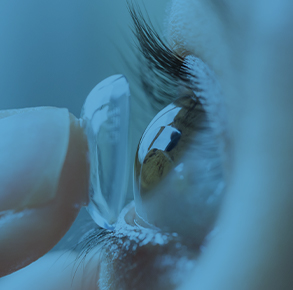
There’s no fixed minimum age. Children as young as eight wear contacts successfully when they’re motivated and can handle the daily hygiene routine reliably. Maturity matters more than age. During a contact lens fitting we’ll assess whether your child is ready and teach them proper handling and care. Daily disposable lenses are often the best starting point for younger wearers.
Do children need blue light glasses?
The evidence that blue light from screens damages children’s eyes is limited, and blue light glasses haven’t been shown to prevent eye disease. What screen time does cause is digital eye strain — dryness, tired eyes, and headaches from reduced blinking and sustained close focus. Regular breaks, adequate distance from the screen, and time spent outdoors do more for your child’s eyes than a lens coating. If your child has screen-related symptoms, an exam can identify whether an underlying focusing problem is contributing.
What eye conditions do you look for in children?
We check for amblyopia (lazy eye), strabismus (eye turn), significant refractive errors, and eye teaming or focusing difficulties — conditions that are most treatable when caught early. We also monitor for myopia, which typically develops between ages 6 and 14 and tends to progress through the teens. If your child is becoming nearsighted, we offer myopia control options designed to slow that progression rather than simply updating the prescription each year
Come Visit Us
Find us just across the street from Jensen Grove Park just off North Meridian Street.

Our Address
- 720 North Meridian Street, Suite A
- Blackfoot, Idaho 83221
Contact Information
- Phone: 208-785-7274
- Text: 208-785-7274
- Email: [email protected]
Hours of Operation
- Monday: 8:00 AM – 5:00 PM
- Tuesday: 8:00 AM – 5:00 PM
- Wednesday: 9:00 AM – 5:00 PM
- Thursday: 8:00 AM – 5:00 PM
- Friday: 8:00 AM – 1:00 PM
- Saturday: Closed
- Sunday: Closed


Our Brands




Our Google Reviews

-
Bluebird Vision + Wellness
- 720 North Meridian Street, Suite A
- Blackfoot, Idaho 83221
-
P: 208-785-7274
[email protected]