
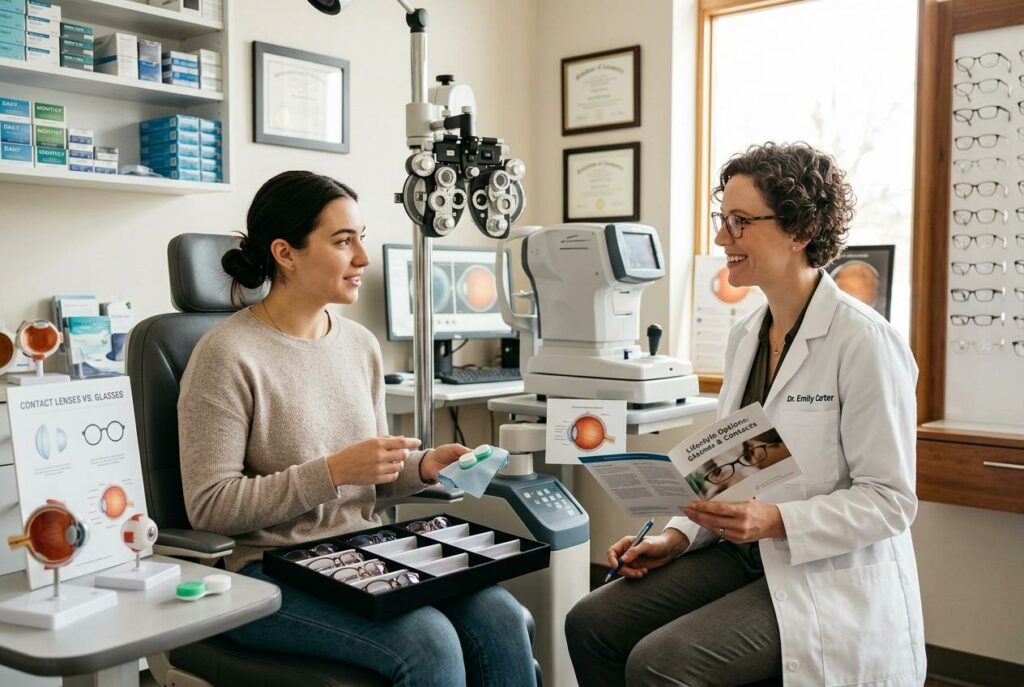
When you’re standing in the mirror each morning, do you reach for your glasses or pop in contact lenses? If you have kids who need vision correction, you might also wonder which option works better for their busy school days and after-school activities.
Both contact lenses and glasses correct your vision effectively, but the right choice depends on your daily activities, age, and personal preferences. Understanding how each option fits into your family’s routine can help you make the right decision for your and your loved one’s needs.
At Bluebird Vision + Wellness, we offer comprehensive contact lens exams and fittings to help you find the perfect match for your eyes.
How Contact Lenses & Glasses Work for Your Vision
Contact lenses sit directly on the tear film that covers the surface of your eyes. This close contact gives you a wider field of clear vision because the lens moves with your eye when you look around.
Glasses sit about 12 millimeters away from your eyes, held in place by frames that rest on your nose and ears. The lenses bend light before it reaches your eyes, correcting nearsightedness, farsightedness, and astigmatism just like contacts do.
Daily Disposable vs. Monthly Options
Daily disposable lenses come in individual packages that you throw away each night. You open a fresh pair every morning, which means no cleaning solutions or storage cases to worry about.
Monthly lenses need to be cleaned and stored in contact lens solution every night. You replace each pair after 30 days, making them less convenient but often more budget-friendly for regular users.
Glasses typically last 2–3 years with normal wear and care. You clean them with lens cleaner or mild soap, and they’re ready to wear again immediately.
Contact Lens Benefits for Active Families
When your teenager plays basketball or your child runs around the playground, contacts offer clear peripheral vision without the obstruction that can be caused by frames.
Rain, snow, and temperature changes don’t fog up contact lenses like they do glasses. Your kids can run from an air-conditioned building into summer heat without their vision blurring from condensation.
Contact Lens Options for Growing Children
Myopia control contact lenses can slow down how quickly your child’s nearsightedness progresses. Beyond just contacts, professional myopia control programs offer comprehensive solutions for managing your child’s vision development.
Many children as young as 8 years old handle contact lenses safely when they follow proper hygiene routines. Kids often feel more confident in school photos and social situations without glasses frames changing how their faces look.
Glasses Advantages for Daily Wear
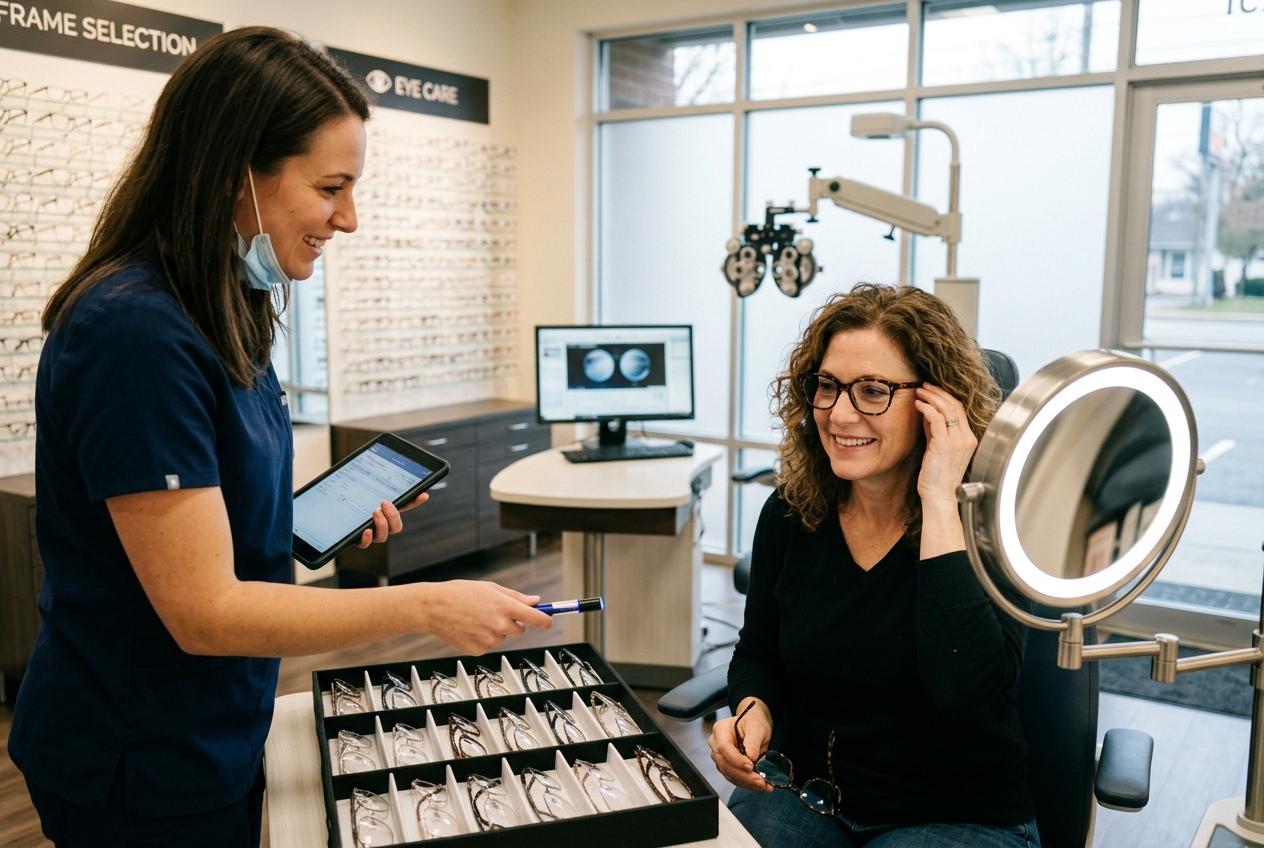
You put glasses on when you wake up and take them off before bed. No hand-washing routine, no worrying about getting something in your eye, and no daily supplies to remember when you travel.
Since glasses don’t touch your eyes, they eliminate the risk of eye infections that can happen when bacteria gets trapped under contact lenses. Your eyes stay naturally moist without any foreign objects affecting your tear film.
Cost Considerations Over Time
A good pair of glasses represents a one-time purchase that serves you for years. Even with prescription changes, you might only need to replace the lenses rather than buying completely new frames. The wide selection of frames and lenses means you can find options that fit both your budget and style preferences.
Contact lens wearers spend money on new lenses every month, plus cleaning solutions, storage cases, and rewetting drops. These ongoing costs add up to hundreds of dollars annually for each person in your family who wears contacts.
Safety & Health Factors to Consider
Contact lens infections happen when bacteria, fungi, or other microorganisms grow on lenses that aren’t cleaned properly. Sleeping in contacts, swimming while wearing them, or using expired solution increases these risks. Proper contact lens care techniques significantly reduce infection risks.
Extended contact lens wear can contribute to dry eye symptoms, especially if you spend a lot of time in front of screens or in air-conditioned environments.
Age-Related Wearing Guidelines
Children need adult supervision to develop proper hand-washing and lens-handling techniques. The responsibility of daily contact care teaches good hygiene habits, but young kids might forget important steps without reminders.
Teenagers often prefer contacts because they feel more attractive without glasses and enjoy the freedom of contacts during social activities. However, they need to balance appearance preferences with consistent care routines to avoid eye problems.
Making the Right Choice for Your Family
Consider how responsible your child is with other daily routines like brushing teeth or completing homework. Contact lens care requires the same level of consistency to keep their eyes healthy and comfortable.
Think about your family’s activities during the week. If your kids play multiple sports or spend lots of time outdoors, contacts might make their active lifestyle easier and more enjoyable. Regular children’s eye exams can help track vision changes and help with proper lens fitting as they grow.
Professional Fitting & Follow-Up Care
Proper contact lens fitting involves measuring your eye’s curvature and checking how tears spread across your eye surface. Your eye doctor will choose the lens materials, size, and shape to prevent discomfort and vision problems.
Regular eye exams monitor how well your contacts fit and whether your eyes stay healthy. Our team at Bluebird Vision + Wellness can provide ongoing support to help your family succeed with whichever vision correction option works for your lifestyle. Contact us to discuss which choice fits your family’s needs and schedule a comprehensive eye exam.