
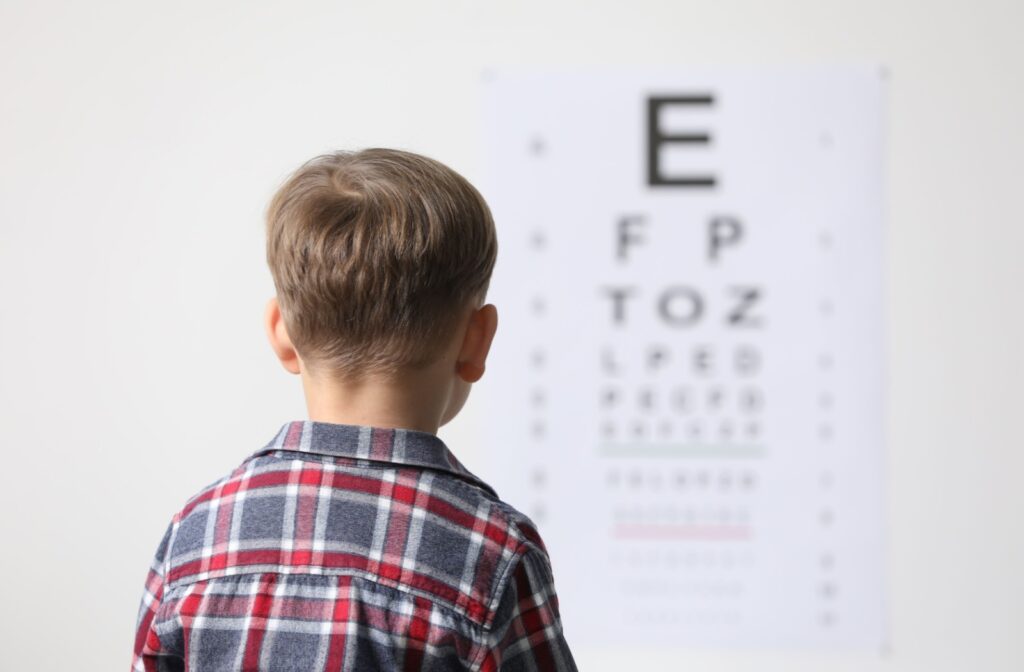
As a parent, you always want what’s right for your child’s health and well-being, and their vision is no exception. If you’ve been noticing your child squinting to see the television, it might be time for a children’s eye exam to see if they have a condition like myopia (or nearsightedness).
Currently, myopia cannot be reversed, but there are effective ways to manage its progression and help your child see clearly. At Bluebird Vision + Wellness, we have made a commitment to your family’s eye health, which means we’re here to guide you through the options and support your child’s long-term vision.
What Is Myopia?
Myopia, commonly known as nearsightedness, is a common vision condition where you can see objects up close clearly, but things far away appear blurry. For families, it’s helpful to know what causes this and how it can affect a child’s vision. This condition develops when the eye focuses images in front of the retina (the back of the eye) instead of directly on it.
How Vision Works
In an eye with clear vision, light focuses directly on the retina. This automatic process allows your brain to see a sharp image, both near and far, without you even noticing.
What Happens with Nearsighted Vision
With myopia, the eyeball is slightly too long from front to back, or the cornea (the clear outer layer of the eye) has too much curve. This causes light to focus in front of the retina instead of on it. As a result, distant objects look out of focus and fuzzy.
What Age Does Myopia Usually Start?
Myopia often appears in school-aged children. Kids are still growing, and so are their eyes, which is why it’s common for nearsightedness to develop and progress during these formative years.
Signs and Symptoms of Myopia in Children
Your child might not always tell you they have blurry vision, so it’s good to know what to look for. Pay attention to these common behaviors at home or school:
- Squinting to see distant objects, like the board in class or the television
- Needing to sit closer to the screen or hold books close to their face
- Eye strain or complaining that their eyes feel tired
- Rubbing their eyes often
Can Myopia Cause Headaches?
The constant eye strain from trying to focus on blurry, distant objects can lead to frequent headaches, similar to how the eye strain from dry eye can cause headaches. If your child mentions headaches, especially after school, it could be related to their vision. This discomfort can be a sign that their eyes are working too hard.
The Difference Between Nearsighted and Farsighted
It’s easy to mix up nearsightedness and farsightedness. Both are refractive errors (meaning the eye doesn’t bend light correctly), but they affect vision in opposite ways. Learning about myopia vs. hyperopia can help you understand your child’s specific needs.
A Simple Way to Remember
- Nearsighted (myopia): You can see things near you clearly, while distant objects are blurry
- Farsighted (hyperopia): You can see things far away clearly, while close-up objects are blurry
Can You Stop or Reverse Myopia?
The Truth About Reversal
Currently, there is no cure that can reverse myopia. The physical changes to the eye’s shape (the elongated eyeball) cannot currently be undone. However, we can use effective methods to manage and slow its progression.
Can Myopia Be Reversed with Age?
Myopia does not reverse on its own as a person gets older. In fact, it is a growing global health problem that often progresses through the teenage years and stabilizes in early adulthood. Vision can change again later in life due to other age-related conditions, but these changes do not reverse myopia.
Myopia Management and Control Options
While we can’t reverse myopia, we can actively manage it with effective myopia control strategies. The goal is to slow down its progression, which helps protect your child’s long-term eye health.
Prescription Glasses and Contact Lenses
Standard glasses and contact lenses are the most common ways to correct blurry distance vision caused by myopia. They work by refocusing light onto the retina, providing clear sight. While they don’t slow progression, they help your child see clearly day to day.
Orthokeratology (Ortho-K) Lenses
Orthokeratology (ortho-k) involves wearing special contact lenses overnight that gently reshape the cornea while your child sleeps. Your child can remove the lenses in the morning and may see clearly during the day without glasses or contacts. This method has also been shown to slow the progression of myopia in many children.
The cost for the initial fitting and first pair of ortho-k lenses can range, based on individual need, from approximately $1,000 to $4,000. After the first year, there are annual costs for new lenses and follow-up care.
Atropine Eye Drops
Low-dose atropine eye drops are another option for myopia control. Used 1 time a day, these drops can help relax the eye’s focusing mechanism. Low-dose atropine may slow down the eye growth that causes myopia to worsen, but your child will still need glasses or contacts to see clearly during the day.
MiSight® 1 Day for Myopia Control
MiSight® 1 day contact lenses are a revolutionary approach to managing myopia in children. These soft, single-use lenses are designed to slow myopia progression by reshaping the way light enters the eye. Studies have shown MiSight® 1 day lenses can reduce the progression of myopia by as much as 59% over a 3-year period. These lenses provide a comfortable, convenient solution for children, with a simple daily wear regimen.
Essilor Stellest Lenses
Essilor Stellest lenses are another innovative option for myopia control. These lenses use an advanced optical technology designed to slow myopia progression by controlling how light is focused in the peripheral vision. Stellest lenses have shown promising results in reducing myopia progression in children, with consistent evidence supporting their effectiveness.
Your Partner in Family Eye Care
Proactive care is key to managing your child’s myopia and protecting their vision for the future. Regular check-ups with your optometrist can help monitor changes and adjust treatment plans as needed. We are here to support your family every step of the way.
Why Regular Eye Exams Matter
An annual comprehensive eye exam helps your optometrist track changes in your child’s vision and eye health. Early detection and management of myopia can make a significant difference in keeping your child’s prescription from changing quickly.
Schedule a Visit Today
At Bluebird Vision + Wellness, we believe a lifetime of healthy vision starts now. A conversation with our team can help you choose the myopia control strategy for your child. Schedule an appointment so we can create a plan together to manage their myopia and support healthy vision for years to come.